
Electric Scooter Laws USA & UK 2026/2027 — Latest Rules, State Laws & UK Trials


Two of INTHEZONE's biggest markets operate under completely different legal systems. The USA is governed by a patchwork of state, city and local rules. The UK still prohibits privately owned e-scooters from ordinary public-road use, while official rental trials continue in England.
The USA and UK Could Hardly Be More Different
In the United States, there is no single federal traffic rule that determines whether an ordinary stand-up e-scooter can be used everywhere. State law, municipal rules, park regulations, shared-scooter permits and local speed restrictions can all matter.
In the United Kingdom, a privately owned e-scooter remains illegal to ride on public roads, pavements, cycle lanes and other public places under the current framework. Legal public-road use is currently centred on approved rental scooters operating inside official English trial areas.
“Legal in America” is too broad. “Legal in the UK” is equally misleading. Start with the exact state, city, jurisdiction and intended use before selecting the scooter.
USA vs UK Electric Scooter Law — The Market in One View
These are not two versions of the same system. The USA generally delegates road-use rules to state and local government. The UK continues to treat ordinary privately owned e-scooters as motor vehicles that cannot currently satisfy the normal requirements for public-road use.
United States
There is no one national answer to “Is my electric scooter road legal?” Federal authorities focus heavily on consumer-product and battery safety, while practical road permission usually comes from state and local law.
United Kingdom
Buying and owning a private e-scooter is different from riding it legally in public. Public-road access is currently restricted to authorised rental e-scooters operating under government trials.
USA and UK E-Scooter Rules Compared
| Question | USA | UK — Private Scooter | UK — Official Rental Trial |
|---|---|---|---|
| One national road law? | No — state and local rules dominate | National motor-vehicle framework restricts public use | Special trial regulations |
| Public-road use | Often permitted subject to state/local law | Not legal for ordinary private use | Yes, inside authorised trial area |
| Pavement / sidewalk | Depends on jurisdiction | Illegal | Illegal |
| Maximum speed | Varies — examples commonly 15–20 mph | Not applicable to lawful public use | 15.5 mph maximum |
| Driving licence | Depends on jurisdiction | Motor-vehicle requirements contribute to public-use restriction | Full or provisional licence with qualifying entitlement |
| Insurance | State/local category dependent | Cannot ordinarily satisfy public-use framework | Third-party cover supplied by rental operator |
| Helmet | State/local/age dependent | N/A for lawful public-road riding | Recommended, not currently a legal requirement |
| Major 2026 development | CPSC battery-rule proposal + major local enforcement changes | Government preparing consultation on future private use | Trial network expanded and extended to May 2028 |

There Is No Single “US E-Scooter Law”
The US Consumer Product Safety Commission explicitly tells riders to follow local traffic law because helmet requirements, roadway use and riding locations differ between communities. This is the defining principle of the US market.
Federal Layer
Federal authorities are especially relevant to consumer-product safety, battery hazards, recalls and manufacturing standards. They do not create one universal street-riding rule for every state.
State Layer
States define categories, age requirements, speed limits, licence rules and where scooters may operate. The definitions themselves can vary.
Local Layer
Cities, counties, universities, parks and shared-mobility programmes may apply tighter speed, route, parking and operating restrictions.
How Different Can US E-Scooter Rules Be?
These examples are not a 50-state legal database. They are deliberately selected to show how dramatically the rules can change between major US markets.
🇺🇸 California
PUBLIC USE ALLOWEDCalifornia DMV treats a motorized scooter as a two-wheel device with a motor, handlebars and floorboard. Public operation is permitted subject to the state's scooter rules.
🗽 New York City
CITY-SPECIFICNYC allows qualifying electric scooters but applies a strict operating-speed rule and increasingly aggressive enforcement against high-speed, overweight and illegal devices.
🤠 Texas
LOCAL CONTROL MATTERSTexas illustrates why local law must always be checked in addition to the state statute. The state framework permits broad access, but municipalities and counties can restrict it.
🇺🇸 Massachusetts
REFORM PROPOSED 2026Existing Massachusetts motorized-scooter law is relatively demanding, while the Governor filed a wider Ride Safe Act in May 2026 to modernise micromobility regulation.
🌲 Oregon
STRICT HELMET RULEOregon defines motor-assisted scooters separately and places clear limits around age, speed and protective equipment.
🌧️ Seattle
2026 SHARED-FLEET UPDATESeattle is a useful example of how a city can add technology-based controls to shared scooters beyond baseline state law.
The Biggest US Story Is Moving From Speed to Safety + Enforcement
Can You Legally Ride a Private E-Scooter in the UK?
On ordinary public roads, pavements, cycle lanes and parks, the current answer for privately owned e-scooters is no. Private scooters may be used on private land with the landowner's permission.
Private E-Scooter
GOV.UK states that privately owned e-scooters cannot legally be ridden in public. Illegal public use can lead to a fine, penalty points and police seizure of the scooter. Buying one does not itself create a right to use it on a public road.
Official Rental Scooter
Approved rental scooters inside government trial areas operate under a special legal framework. They may be ridden on public roads and cycle lanes in participating areas, but not on pavements or motorways.
The Trials Are Now Scheduled to Continue Until 31 May 2028
The Department for Transport says there are currently 21 live trials across England. The extension is intended to fill evidence gaps around safety, local conditions and how e-scooters fit into transport policy before permanent legislation is finalised.
15.5 mph Maximum
The national maximum speed for an official rental trial scooter is 15.5 mph. Local schemes may impose lower speed limits.
Licence Required
A user must have a full or provisional UK driving licence with the relevant category Q entitlement. Certain foreign licences can also qualify.
Insurance Included
Third-party motor insurance is supplied by the rental-scheme operator. This is one of the major legal differences from private ownership.
Helmet Recommended
GOV.UK recommends wearing a cycle helmet for trial rental use, but it is not currently a statutory requirement.
One Rider Only
Rental scooters must only carry one person. Towing is prohibited and a mobile phone must not be used while riding.
Road + Cycle Lane
Official rental scooters may use roads and authorised cycle lanes inside trial areas. Pavements and motorways remain prohibited.
Where UK Rental Trials Are Operating
These are the trial areas listed by the Department for Transport in its July 2026 user guidance.
| Area | Current 2026 Position | Note |
|---|---|---|
| Bournemouth & Poole | Official trial | England rental scheme |
| Brighton & Hove | Official trial | Added in 2026 |
| Buckinghamshire | Official trial | Aylesbury / High Wycombe |
| Cambridge | Official trial | Rental use only |
| Cornwall | Official trial | Added in 2026 |
| Essex | Official trial | Braintree / Chelmsford |
| Gloucestershire | Official trial | Cheltenham / Gloucester area |
| Leeds | Official trial | Opened 19 March 2026 |
| Liverpool | Official trial | Rental use only |
| London | Official trial | Participating boroughs only |
| Milton Keynes | Official trial | Rental use only |
| North & West Northamptonshire | Official trial | Multiple participating towns |
| Norwich | Official trial | Rental use only |
| Nottingham | Official trial | Current DfT listing |
| Oxford | Official trial | Rental use only |
| Plymouth | Official trial | Added in 2026 |
| Salford | Official trial | Rental use only |
| Slough | Official trial | Current DfT listing |
| Solent | Official trial | Isle of Wight / Portsmouth / Southampton |
| West Midlands | Official trial | Birmingham / Coventry |
| West of England | Official trial | Bristol / Bath / parts of South Gloucestershire |
Government Is Preparing a Route Toward Private E-Scooter Regulation
In July 2026, the UK Government told Parliament it intends to consult on regulations governing how private e-scooters could be used on roads. Primary legislation would still be required before those changes could be implemented.
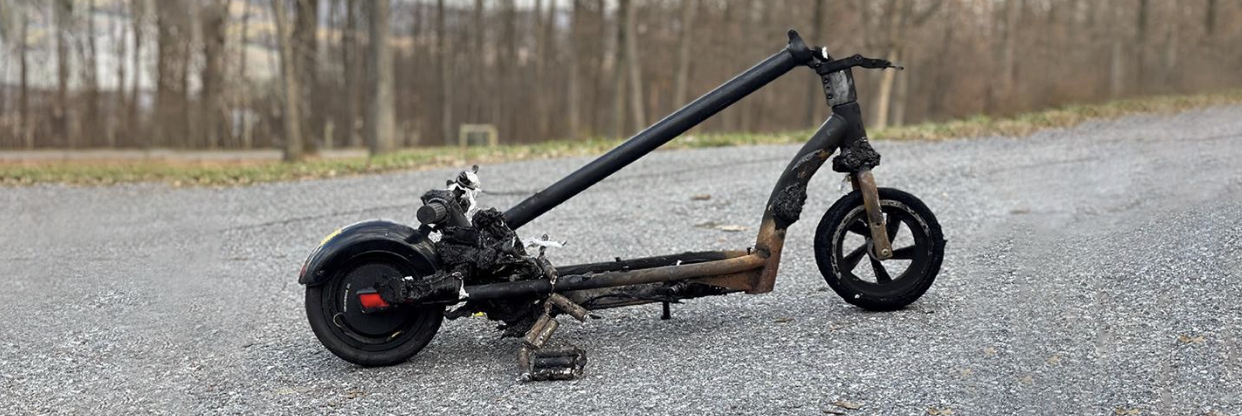
The Next Regulatory Battlefield Is Inside the Scooter
Speed limits attract attention, but battery quality, charging compatibility and electrical-system certification are increasingly central to both product safety and retailer responsibility.
USA — CPSC Proposal
In June 2026, CPSC approved publication of a proposed mandatory lithium-ion battery safety standard covering micromobility products. It is important to call this proposed rather than final law.
UL 2272
CPSC has repeatedly urged manufacturers, importers and consumers to use devices designed and certified to applicable consensus safety standards, including UL 2272 for personal e-mobility systems.
Chargers Matter
CPSC warns users to use the supplied or manufacturer-approved charger, remain present while charging and avoid modified, rebuilt or incompatible battery packs.
How to Buy for the USA or UK Without Mixing the Rules
01 — Name the Location
USA: state + city. UK: private land or authorised rental trial. The country name alone is not specific enough.
02 — Check Classification
A powerful, seated or unusually heavy scooter may leave the ordinary e-scooter category and enter moped, motorcycle or other motor-vehicle rules.
03 — Check Design Speed
A “slow mode” does not necessarily change the manufacturer's maximum capability or legal classification.
04 — Verify Battery Safety
Check certification, original charger, battery supplier and replacement-part compatibility. Avoid vague or unsupported “UL certified” claims.
05 — Separate Sale From Use
Especially in the UK, a scooter may be available to purchase even when ordinary public-road use is prohibited.
06 — High Power = New Question
Do not assume 1000W, dual-motor or 40+ mph scooters belong to the same legal category as low-speed commuter devices.
Five Claims That Need More Precision
“Street Legal in the USA”
Too broad. Road permission depends on the state and often the city. Use exact jurisdiction-specific wording.
“UK Road Legal”
Ordinary privately owned e-scooters are not currently legal for routine public-road use. Do not use this claim for a private scooter.
“Limited to 15 mph = Legal”
Speed is only one variable. Age, licensing, equipment, weight, category and route can also matter.
“UL Battery”
Verify the exact safety mark, scope and product configuration. False certification labels have already triggered CPSC recalls.
“Rental Trial = UK Legalisation”
Incorrect. Trial scooters have a special legal framework. Private-scooter rules have not yet changed.
“Private Land = Anywhere Off-Road”
Private land use still requires landowner permission. Public parks, greenways or paths are not automatically “private-land” riding areas.
Electric Scooter Laws USA & UK — FAQ
Are electric scooters legal in the USA in 2026?
Electric scooters can be legal for public use in many parts of the United States, but there is no single national road-use rule. State and local laws determine factors such as speed, age, helmets, sidewalks and permissible roads.
Is there a federal electric scooter speed limit in the USA?
No single federal traffic-speed limit applies to ordinary e-scooters across every US state. Speed rules are generally established by state and local law. Examples include 15 mph in California, New York City and Oregon, while other jurisdictions use different frameworks.
Are private electric scooters legal on UK roads in 2026?
No. Privately owned e-scooters remain illegal to ride on ordinary public roads, pavements, cycle lanes and other public places in the UK under the current framework. They may be used on private land with the landowner's permission.
Can I legally buy a private e-scooter in the UK?
Buying or owning a private e-scooter is different from using it legally in public. The current restriction concerns public-road and public-place use. A privately owned scooter may be used on private land with permission.
What is the maximum speed of a UK rental e-scooter?
The Department for Transport sets a maximum speed of 15.5 mph for official rental trial scooters. Individual trial areas can apply lower limits.
Do you need a driving licence for a UK rental e-scooter?
Yes. A rider must have a full or provisional UK driving licence with the relevant category Q entitlement. Certain full foreign licences can also qualify under the government's rules.
Do UK rental e-scooters need insurance?
Yes. Third-party motor insurance is required for official rental-trial use and is supplied by the rental operator.
Is a helmet compulsory on a UK rental e-scooter?
Helmets are strongly recommended by the UK Government for official rental scooters, but they are not currently a legal requirement under the national trial rules.
When will private electric scooters become road legal in the UK?
No commencement date has been set. In July 2026 the Government said it would consult on regulations for private e-scooter road use before delivering the primary legislation needed to implement a new framework when parliamentary time allows.
When do the UK rental e-scooter trials end?
The Department for Transport currently states that the 21 live English trials are due to end on 31 May 2028.
What is changing with e-scooter batteries in the USA?
In June 2026, the US Consumer Product Safety Commission approved publication of a proposed mandatory safety standard for lithium-ion batteries used in micromobility products. The rulemaking addresses hazards including thermal runaway, fires and explosions. It is a proposed rule, not yet a final nationwide battery standard.
Are high-powered 1000W electric scooters legal in the USA?
There is no universal US answer. Classification depends on the state and locality as well as speed, weight, motor output, vehicle construction and intended road. A high-powered scooter may fall outside a jurisdiction's ordinary scooter category or into moped or motor-vehicle rules.
Official Sources Used for This USA + UK Guide
E-scooter law changes quickly. INTHEZONE prioritises government, transport authority and primary legislative sources and separates current law from proposals or consultations.
ONE SCOOTER. TWO MARKETS. COMPLETELY DIFFERENT RULEBOOKS.
In the USA, start with the state and city. In the UK, start by asking whether the journey is private land or an authorised rental trial. Then match the exact scooter, specification, battery system and intended use to the legal environment.
Editorial information only; not legal advice. Reviewed 3 October 2026. US e-scooter laws vary by state, municipality, road, park and device classification. UK rules, trial areas and future legislation can change. Always verify the latest law with the relevant state DMV, city transport authority, UK Department for Transport, police or other competent authority before riding or purchasing. Product availability on INTHEZONE does not itself establish public-road legality in any jurisdiction.


