


01
Registered Business Details
INTHEZONE Electric Mobility LimitedRegus Online Alexandra House, Ballsbridge Park 3
Dublin, D04 C7H2
Ireland

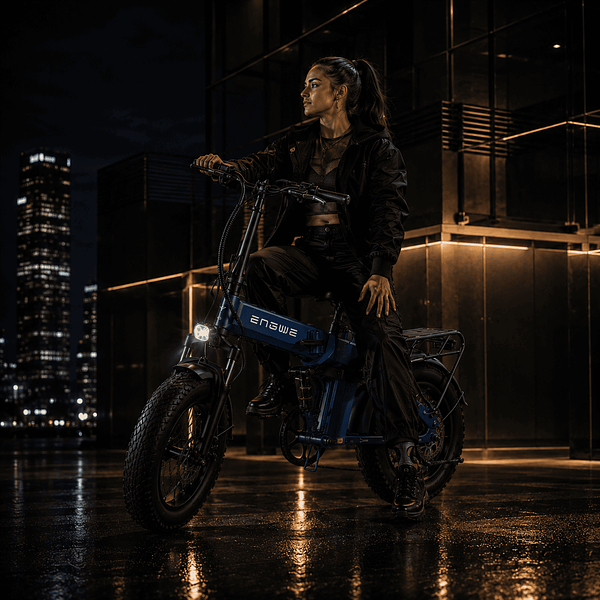
Welcome rider. This is your big boy brand fight page — a deep, clear, functional comparison between two major electric bike names in the value-performance market: ENGWE and SAMEBIKE.
If you are comparing ENGWE vs SAMEBIKE for folding e-bikes, fat-tyre adventure bikes, commuter e-bikes, long-range value, urban portability, and overall purchase confidence in 2026, this page is built to help you choose clearly and buy smart.
ENGWE has built a stronger premium-value aura. Its collection leans heavily into folding fat-tire bikes, step-through utility models, stylish adventure options and increasingly polished urban commuters. Visually, the brand often feels more mature and more “finished” from a marketing perspective.
SAMEBIKE fights from the practical side. The brand is especially attractive for buyers who want range across commuter, folding, fat-tire and utility categories without paying for brand cachet first. The selling point is simple: more entry points, broader value logic, and plenty of buyers asking whether SAMEBIKE quietly outperforms expectations for the money.
ENGWE feels stronger as a brand. SAMEBIKE often feels stronger as a value argument.
ENGWE is especially dangerous here. The Engine family, EP-2 family and P20 give ENGWE a very strong folding portfolio. SAMEBIKE still fights hard with LOTDM200 II, XD26-II and CY20, but ENGWE’s folding category feels more iconic overall.
Both brands have credible fat-tyre options. ENGWE brings more lifestyle power with models like M20, E26 and X26. SAMEBIKE counters with LOTDM200 II and M20-III, often with very compelling value logic.
SAMEBIKE’s RS series, C05 PRO and city-friendly lineup make it very competitive for practical urban buying. ENGWE’s P20, P275 SE, MapFour bikes and L20 family fight back with more polished commuter identity.
ENGWE’s LE20 cargo direction and L20 family give it a stronger utility halo. SAMEBIKE’s C05 PRO and some commuter models remain relevant, but ENGWE feels more complete in this category.
ENGWE’s Engine family, EP-2 family and P20 give it the stronger folding identity overall. SAMEBIKE still deserves respect here, especially with LOTDM200 II and XD26-II, but ENGWE has the more iconic folding portfolio.
If you want stronger lifestyle prestige and flagship feel, ENGWE usually takes the edge with M20, E26 and X26. If you want fat-tyre value and practical affordability, SAMEBIKE fights back very hard with LOTDM200 II, M20-III and LO26 PLUS 1000W.
ENGWE has stronger polished commuter identity with P20, P275 SE, MapFour N1 Pro and N1 Air. SAMEBIKE has stronger value density in the commuter segment with RS-A01, RS-A02, RS-A08, C05 PRO, RS-A07 and TDE10Z.
The LE20 cargo bike plus the L20 family give ENGWE more complete utility credibility. SAMEBIKE has useful bikes, but ENGWE feels more rounded for buyers explicitly seeking utility-focused ownership.
ENGWE often wins if you can stretch budget slightly and want a more polished folding ecosystem. SAMEBIKE wins if you want a more cost-conscious entry into folding ownership. Strong picks: ENGWE Engine 3.0 Pro Boost, Engine Pro 2.0, EP-2 3.0 Boost vs SAMEBIKE LOTDM200 II, XD26-II, CY20.
ENGWE takes the emotional win with M20, E26 and X26. SAMEBIKE remains highly relevant if value is a bigger concern than brand aura, especially with M20-III and LO26 PLUS 1000W.
ENGWE suits buyers who want cleaner, more premium-feeling commuting. SAMEBIKE suits buyers who want more price-performance aggression across commuter choices.
SAMEBIKE can be easier to justify financially. ENGWE can feel easier to trust emotionally because the brand presentation is stronger. This is one of the most real trade-offs in the whole fight.
Fast scooters are not impulse purchases for most buyers. That is exactly why your payment options page matters so much in this category. It helps riders understand how to step into a stronger scooter without creating unnecessary confusion around country-specific payment routes.

For Ireland, Humm is structured as the longer monthly-payment path. It is especially relevant for buyers who want to move from a commuter-class scooter to a higher-performance model and need a more comfortable month-by-month spread.
For the UK, Humm is presented as the cleaner, shorter-term route. This is useful for buyers who want more structured monthly flexibility without stretching the timeline as far as the Irish route.

Klarna Europe is positioned as the flexible checkout route across many European markets. For many supported countries, the simple headline option is Pay in 3, while selected countries also have longer pay-over-time finance options.
ENGWE usually feels stronger on brand image, flagship polish and folding-bike prestige. SAMEBIKE often feels stronger on raw value and budget-friendly variety.
In many parts of the lineup, SAMEBIKE is easier to access at lower budgets, which is one reason it stays highly competitive.
ENGWE has the stronger folding identity overall, but SAMEBIKE offers very compelling folding-value options.
ENGWE often wins on flagship appeal, while SAMEBIKE can win on fat-tyre value.
ENGWE wins on premium-feeling commuter options, while SAMEBIKE wins on commuter value density.
Both have folding options, but ENGWE’s folding portfolio is more iconic, while SAMEBIKE’s is often easier to justify financially.
Yes, ENGWE currently feels stronger in utility and cargo direction, especially with the LE20 and L20 family.
For many buyers, yes. SAMEBIKE’s value proposition is one of its biggest strengths.
Choose ENGWE if you want stronger premium confidence. Choose SAMEBIKE if you want stronger budget logic.
For pure brand strength, ENGWE. For pure value pressure, SAMEBIKE. The best answer depends on the rider’s priorities.


Humm offers monthly finance in Ireland and the UK. Klarna gives Pay in 3 and selected longer finance in eligible EU markets. PayPal offers Pay Later plus Buyer Protection where eligible. SEPA Bank Transfer lets you pay directly and save 5% with code SEPA5. Choose the route that best suits your budget.