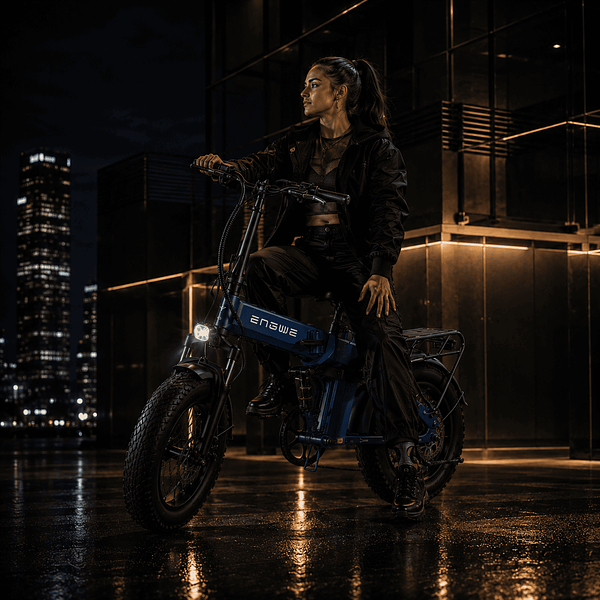
ENGWE Engine Pro 2.0 Electric Bike: Buyer Guide for Ireland, UK and EU
ENGWE Engine Pro 2.0 Electric Bike: Big Buyer Guide for Ireland, UK and EU

The ENGWE Engine Pro 2.0 electric bike matters because it targets a serious buyer problem. Plenty of riders want a folding e-bike for storage and transport convenience, but they do not want the ride to feel stripped back, budget-led or underpowered once roads get rough, hills start appearing or longer weekend routes enter the picture. That is exactly where the Engine Pro 2.0 makes sense. It combines a torque sensor, 75 Nm torque, full suspension, hydraulic disc braking and fat tyres into a foldable platform that pushes well above the usual expectations of an entry-level folder.
Performance and portability together
The Engine Pro 2.0 sits in the premium folding category for buyers who want more than a simple city bike. It is relevant to riders who care about all-round ride confidence, smoother assist feel, stronger braking and better rough-surface control, while still keeping foldability in the ownership equation.
Finance fit is natural here. INTHEZONE already surfaces Humm, Klarna and PayPal Buyer Protection around the buying journey, which matters more as the bike moves into premium purchase territory.
Why the Engine Pro 2.0 matters in the real market
The folding e-bike space often splits in two directions. One end of the market chases compactness and price, but sacrifices ride feel, battery confidence, braking quality and terrain versatility. The other end adds more capability, but grows into heavier, non-folding machines that ask for more storage space and less flexibility. The Engine Pro 2.0 matters because it sits right in between those two extremes.
It is a bike for buyers who still want folding practicality, but who also want the hardware to feel convincing when the route gets longer, hillier or rougher. That means it is not just about headline numbers. It is about how the parts combine. Torque sensor assistance, hydraulic braking, full suspension and 20 x 4.0 tyres all work together to create a much more composed ride personality than a basic compact folder usually can.
In Ireland, the UK and much of the EU, that matters because the best buying decision is rarely about chasing the biggest spec sheet in isolation. It is about choosing the bike that best matches weather, roads, storage reality, commute length, comfort expectations and the way you actually intend to use it week after week.
What the Engine Pro 2.0 actually is
The Engine Pro 2.0 is a premium folding fat-tyre electric bike with a very clear purpose. It is designed for riders who still need foldability, but who want the rest of the bike to feel more like a serious mixed-use machine than a storage-first compromise. That is why the product leans on torque-sensor response, hydraulic brakes, Shimano Altus 8-speed gearing, full suspension and fat tyres rather than on stripped-back commuter hardware.
In plain English, this is the kind of bike you choose when you want more comfort, more ride confidence and a more natural assist feel than a simple city-led folder can normally give. It is not the lightest option. It is the more complete one.
Specs explained in human language
Real-world use cases
The Engine Pro 2.0 makes the most sense for riders whose journeys are not perfectly controlled. It suits rough urban commuting, countryside routes, weekend leisure rides, gravel detours, mixed-surface riding and buyers who want a more premium-feeling folder than the average city model.
It is particularly relevant if your local roads are poor. Fat tyres and full suspension are not just aesthetic choices here. They change the comfort and confidence profile of the bike in ways that matter on patched asphalt, road joins, winter debris and inconsistent cycle-route surfaces.
Folding also remains a major part of the value. It is not featherweight, but it is still easier to store than a full-size fat-tyre e-bike. That can matter a lot in flats, offices, garages, camper transport and boot-of-car ownership.
Who should buy it
- Premium-folder shoppers: riders who want foldability without basic ride feel.
- Mixed-surface commuters: buyers whose routes include rough roads, poor tarmac or gravel sections.
- Leisure-plus-utility riders: people wanting one bike that works for weekday tasks and weekend riding.
- Torque-sensor buyers: riders who value smoother, more natural assist behaviour over simpler assist systems.
- Riders around 160 cm to 190 cm: the official page frames the bike in that height window.
Hill performance and terrain logic
The Engine Pro 2.0 is not just another folding e-bike with a bigger battery. Its hill logic comes from the combination of 75 Nm torque, an 8-speed drivetrain, fat tyres and a more planted full-suspension platform. That matters because climbing is not only about raw power. It is about how predictably the bike delivers support, how composed it feels under load and how much grip and comfort it maintains when surfaces are less than perfect.
Compared with compact mini folders like the ENGWE T14 or many entry-level urban designs, the Engine Pro 2.0 should feel materially stronger and calmer on light-to-moderate hills. Compared with newer and even more advanced models like the Engine Pro 3.0 Boost, it is still a step behind, but it remains a serious platform in its own right.
Terrain-wise, it sits best on a mix of tarmac, poor-quality roads, gravel and light trail-style surfaces. It is not pretending to be a full mountain-bike replacement. It is trying to be a more capable all-round folding fat-tyre e-bike, and that framing suits it well.
Big comparison table: ENGWE vs SAMEBIKE vs BEZIOR
This table is designed to help buyers see the category more clearly. It deliberately mixes direct rivals with adjacent alternatives so you can spot where the Engine Pro 2.0 sits in the wider folding, fat-tyre and mixed-use e-bike landscape. Where a brand page does not clearly state a detail in the source used here, the table says so instead of guessing.
| Category | ENGWE Engine Pro 2.0 | ENGWE Engine Pro 3.0 Boost | ENGWE EP-2 3.0 Boost | ENGWE M20 | SAMEBIKE M20 | SAMEBIKE RS-A01 Pro-T | SAMEBIKE LO26 Plus | SAMEBIKE C05 Pro | BEZIOR X1500 | BEZIOR X Plus |
|---|---|---|---|---|---|---|---|---|---|---|
| Positioning | Premium folding fat-tyre all-rounder | Newest premium ENGWE full-suspension folder | Advanced folding fat-tyre utility bike | Moped-style dual-suspension fat bike | Retro street electric bike | Urban commuter torque-sensor e-bike | Foldable fat-tyre mountain-style e-bike | Compact step-through foldable fat-tyre e-bike | High-power folding electric mountain bike | High-power electric mountain bike |
| Motor / drive claim | Integrated hub motor | EU legal 250W, 48V hub motor | 48V hub motor | Brushless motor | 1000W motor | 250W motor | High-performance motor | 250W motor | 1500W motor | 1500W motor |
| Torque | 75 Nm | 90 Nm | 75 Nm | 55 N.m | 80+ Nm | 55+ Nm | 80+ Nm | 55+ Nm | Not clearly stated in source used here | Not clearly stated in source used here |
| Assist system | Torque sensor | Torque sensor | Torque sensor | Not clearly stated in source used here | Not clearly stated in source used here | Torque sensor | Not clearly stated in source used here | Not clearly stated in source used here | Not clearly stated in source used here | Not clearly stated in source used here |
| Battery | 16Ah | 48V 15Ah Samsung 21700 cells | 48V 13.5Ah | 48V 13Ah or dual 26Ah version | 48V 18Ah | 36V 15Ah | 48V 15Ah | 36V 13Ah | 48V 12.8Ah | 48V 17.5Ah |
| Published range | 110 km PAS 1 | 130 km long range | Real-world range 120 km PAS 1 | 75 km PAS mode 1 with 13Ah version | Up to 140 km | 55 to 110 km | 55 to 110 km | 45 to 90 km | 100 km power assisted range | 130 km mileage |
| Top speed / default speed | 25 km/h | EU legal 250W positioning | Not clearly stated in source used here | 25 km/h | 25 km/h default | 25 km/h | 25 km/h | 25 km/h | 40 km/h | Not clearly stated in source used here |
| Tyres | 20 x 4.0 | 20 x 4.0 urban hybrid tyres | Not clearly stated in source used here | 20 x 4.0 fat tyres | Not clearly stated in source used here | 27.5 inch large frame commuter format | 26 x 3.0 wide tyres | Foldable fat-tyre format | Not clearly stated in source used here | Not clearly stated in source used here |
| Suspension | Full suspension | Full suspension | Not clearly stated in source used here | Dual suspension style positioning | Full suspension with shock-absorption seat | Front fork / double shock language on page | Dual suspension | Double suspension systems | Not clearly stated in source used here | Not clearly stated in source used here |
| Brakes | Hydraulic disc brakes 160 mm | Hydraulic dual-piston | Hydraulic dual-piston, 180 mm | 160 mm front and rear disc machine brake | Not clearly stated in source used here | Not clearly stated in source used here | Not clearly stated in source used here | Not clearly stated in source used here | Hydraulic disc brakes | Not clearly stated in source used here |
| Weight | 31.6 kg | 34.7 kg | 32.3 kg | 34.8 kg | Not clearly stated in source used here | Not clearly stated in source used here | Not clearly stated in source used here | Not clearly stated in source used here | 25 kg | Not clearly stated in source used here |
| Foldability | Yes | Yes | Yes | Not clearly stated in source used here | Not clearly stated in source used here | Not clearly stated in source used here | Yes | Yes | Yes | Not clearly stated in source used here |
| Best fit | Premium folding mixed-use buyer | Newest top-tier ENGWE folding performance buyer | Tech-upgraded folding fat-tyre utility buyer | Moped-style leisure and style buyer | Retro street style and stronger motor appeal | Urban commuter and daily city rider | Fat-tyre foldable adventure-style value buyer | Compact foldable commuter and light mixed-terrain user | High-power off-road leaning folding value buyer | High-power mountain-bike leaning value buyer |
Fast reading guide: if you want the most advanced current ENGWE folder, Engine Pro 3.0 Boost is the obvious step up. If you want a premium folding bike without stretching that far, Engine Pro 2.0 still makes a very strong case. If you want a more utility-led folding fat-tyre machine, EP-2 3.0 Boost is a serious rival. If you want more aggressive value or retro-style alternatives, the SAMEBIKE and BEZIOR rows show where the market starts shifting away from refined legal-market folding balance and toward different priorities.
Price, value and buying logic
The Engine Pro 2.0 is not the right bike for a buyer chasing the cheapest way into the category. It is for the buyer who knows that better brakes, better assist feel, better suspension and better mixed-surface confidence will matter week after week after the novelty wears off.
That buying logic is why the comparison table matters. On paper, some SAMEBIKE and BEZIOR models can look aggressive on battery or motor claims. But the more important question is what sort of ownership experience you actually want. The Engine Pro 2.0 is not trying to win by shouting the loudest. It is trying to offer a more coherent premium folding package.
For riders who want a smoother, more natural, more composed e-bike that still folds, that difference is worth real money.
Finance, trust and delivery relevance
Premium e-bike purchases are exactly where finance and trust become commercially important. INTHEZONE’s live payment and finance pages bring Humm Ireland, Humm UK, Klarna and PayPal Buyer Protection into one connected path, which helps reduce friction when the buyer is weighing a higher-spec purchase rather than an impulse buy.
Delivery and support logic also matter. Your live shipping, warranty, returns and Ireland legal pages help turn the product decision into a full buying framework rather than a raw specs page. That matters for serious buyers, because they are not only asking what the bike is. They are asking how safe the checkout feels, how the item ships, what support exists and what road-use logic they should understand before buying.
Internal authority links for smarter buyers
Compare the wider ENGWE range before choosing a premium folder.
Complete Electric Bike Guide 2026Broader buying logic across categories and markets.
Best Electric Bikes Under 1500Useful if price-band comparison is still part of the decision.
Understand timelines, carriers and delivery structure.
Warranty PolicySee how support and defect coverage are framed.
Returns and RefundsImportant for battery-product return expectations.
Review Humm Ireland, Humm UK and Klarna pathways.
Payment OptionsSee Humm, Klarna and PayPal Buyer Protection in one place.
PayPal Buyer ProtectionUseful for buyers prioritising dispute-path clarity and safer checkout.
Useful for Irish public-road buying logic.
EU Electric Bike Laws 2026Helpful for broader European compliance awareness.
Customer Responsibility PolicyClarifies ownership and use expectations.
Browse the wider brand line-up.
Engine Pro 2.0 Product PageGo straight to the live listing.
ENGWE EP-2 BoostSee a stronger value-oriented folding fat-tyre alternative on your store.
ENGWE T14See the smaller compact urban contrast.
Frequently asked questions
What is the ENGWE Engine Pro 2.0 best for?
Is the Engine Pro 2.0 good for hills?
Is the Engine Pro 2.0 good for rough roads?
How much range does the Engine Pro 2.0 have?
How does Engine Pro 2.0 compare with Engine Pro 3.0 Boost?
How does Engine Pro 2.0 compare with EP-2 3.0 Boost?
Is the Engine Pro 2.0 still practical to store?
Can I finance the Engine Pro 2.0 through INTHEZONE?
Who should skip the Engine Pro 2.0?
Why are some comparison fields marked unclear?
Premium folding power, without the old schema risk
The Engine Pro 2.0 makes the strongest case for riders who still need a foldable frame but want the bike to feel materially more serious than a basic urban folder. If your priorities are ride quality, torque-sensor response, rough-road comfort and broader mixed-use confidence, it remains one of the clearest premium options in the folding fat-tyre space.
Why this version is safer
This block is HTML only. There are no manual schema scripts inside it, so Smart SEO can keep owning the structured-data layer without the same conflict risk you hit before.
Paste into Custom Liquid or HTML source only, not Rich Text.