ENGWE EP-2 Boost Electric Bike: Ireland, UK and EU Buyer Guide
ENGWE EP-2 Boost Electric Bike: Ireland, UK and EU Buyer Guide

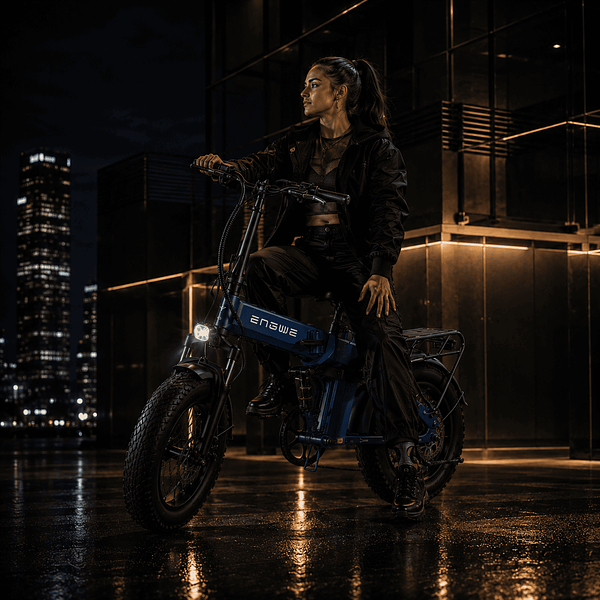
The ENGWE EP-2 Boost electric bike matters because it solves a very real buying problem. Plenty of riders want one e-bike that can handle weekday commuting, rougher road surfaces, leisure riding and occasional light trail logic without becoming a huge non-folding machine that is awkward to store. That is where the EP-2 Boost lands well. It combines a 250W European-market setup, 48V 13Ah removable battery, Shimano 7-speed gearing, front suspension and 20 x 4.0 fat tyres with a foldable frame that still fits better into real everyday life than many full-size fat-tyre bikes.
Foldable size. Bigger-bike logic.
EUR 1,199For Ireland, the UK and much of the EU, the EP-2 Boost sits in an attractive middle ground. It is materially more capable than compact mini folders, yet still easier to store than many larger fat-tyre electric bikes. That makes it commercially relevant to buyers who want one-bike versatility rather than a narrow, single-purpose machine.
Finance relevance is natural here: Humm supports Ireland and UK monthly-style routes, Klarna broadens split-payment logic in configured European markets, and PayPal Buyer Protection works as a confidence layer for buyers who prioritise checkout reassurance.
Why the ENGWE EP-2 Boost matters
The EP-2 Boost matters because a lot of electric bike buyers are stuck between two extremes. On one side, there are tiny entry-level folding bikes that are easy to store but limited in range, tyre volume and general confidence. On the other side, there are larger full-size bikes that ride bigger but create storage headaches and remove the flexibility that folding ownership can offer. The EP-2 Boost works because it sits between those categories instead of blindly chasing one.
That middle-ground logic is commercially powerful. A buyer in Ireland or the UK may want a bike that can manage poor road surfaces, weather shifts, cycle lane imperfections and weekend leisure use without needing a car rack or a garage-sized storage commitment. A buyer in the EU may want a legal-market 250W framework, practical 25 km/h ceiling and a bike that feels broader in use than a narrow-tyre city commuter. The EP-2 Boost answers all of those points with a more balanced package.
This is also why the bike deserves a stronger blog page than a short spec list. Buyers do not just need to know what the EP-2 Boost is. They need to know whether it is the right shape of ownership for their roads, storage, terrain, finance plan and riding ambitions.
What the EP-2 Boost actually is
The ENGWE EP-2 Boost is a foldable fat-tyre electric bike built around broad everyday use. It is not a tiny mini-bike, and it is not pretending to be a deregulated high-power off-road machine either. Instead, it is a legal-market 250W folding e-bike with substantially more tyre, range and carrying confidence than lighter urban folders.
In practical terms, the bike is trying to do three things at once. First, it needs to remain easier to store than a full-size fat-tyre model. Second, it needs to feel more capable than a compact city e-bike when road quality drops or rides get longer. Third, it needs to stay commercially accessible enough that it makes sense as a serious daily-use purchase rather than a niche enthusiast toy.
That makes it especially relevant for riders who want one electric bike for commuting, everyday errands, leisure rides and mixed-surface movement instead of buying one bike for city use and another for weekend fun.
Specs explained in human language
Real-world use cases
The EP-2 Boost makes the most sense for riders whose routes are mixed rather than perfectly controlled. It suits everyday commuting, local trips, rough urban roads, gravel cut-throughs, countryside detours and casual weekend distance better than a compact mini e-bike does.
The fat tyres are not just aesthetic. They change the comfort and confidence profile of the bike. Broken edges in the road, patchy asphalt, winter debris, gravel sections and imperfect urban surfaces become easier to live with. That wider tyre contact patch also helps buyers who simply want a more planted feeling under them.
Folding still matters too. The EP-2 Boost is not ultra-light, but it is materially easier to store than a full-size fat-tyre bike. If your ownership reality includes flats, offices, compact garages, car boots or seasonal storage, that matters.
Who should buy it
- Mixed-surface commuters: riders dealing with more than perfect city tarmac.
- Storage-aware buyers: people who still need a foldable frame instead of a permanently large bike.
- Heavier-duty everyday riders: buyers who want more load capacity, more tyre and more battery than a mini folder can offer.
- Leisure plus utility shoppers: riders wanting one bike that works for both routine transport and relaxed weekend use.
- Riders around the published 160 cm to 190 cm height window: the live page positions the EP-2 Boost in that rider range.
Hill performance and terrain logic
Buyers often ask the wrong hill question. They ask whether a bike is good on hills as if that were a simple yes or no. The better question is whether the bike has enough torque, gearing, tyre grip and ride stability for the hills you actually ride. That is where the EP-2 Boost separates itself from smaller entry-level folders.
With 55 Nm torque and Shimano 7-speed gearing, the EP-2 Boost should feel meaningfully stronger on light-to-moderate gradients than a compact mini folder like the T14. The larger tyres and broader stance also help the bike feel calmer on rougher climbs, loose surfaces and wetter routes. It is not a high-power off-road hill weapon, and buyers should not frame it that way. But in the legal-market 250W conversation, it brings more useful hill logic than many city-led folders do.
Terrain-wise, the bike sits best on a mix of asphalt, poor-quality urban roads, gravel, hardpack and light trail-style surfaces. It is more versatile than a narrow-tyre commuter, but it is still best understood as a practical mixed-use e-bike rather than a pure mountain or dirt-bike substitute.
Commuting, leisure and everyday ownership logic
For commuting, the EP-2 Boost makes sense if your journey is not perfectly polished. If roads are broken, curbs are rough, bike lanes are patchy or you simply want more comfort and planted ride feel, the fat-tyre setup becomes easier to justify. The foldable frame also gives office and apartment users an ownership advantage that many larger utility bikes cannot match.
For leisure use, the long published PAS range matters because it expands the bike beyond short local hops. That does not mean every rider will see 120 km in normal use. It means the EP-2 Boost has enough battery headroom to feel less restricted than compact folders that run out of use case quickly once the ride gets longer.
Ownership logic is where the bike becomes most interesting. It is heavier than lighter commuter folders, so it is not the best choice for buyers who expect to carry the bike upstairs every day. But if you want broader ride confidence and can accept the extra mass, the trade-off becomes much easier to justify.
ENGWE EP-2 Boost vs L20 Boost vs T14
The clearest way to understand the EP-2 Boost is to compare it with two very different alternatives in the same brand family. The T14 shows what happens when compactness and budget come first. The L20 Boost shows what happens when comfort, step-through access and torque rise further. The EP-2 Boost sits in the middle as the stronger all-round folding fat-tyre choice.
| Category | ENGWE EP-2 Boost | ENGWE L20 Boost | ENGWE T14 |
|---|---|---|---|
| Live Price | EUR 1,199 | EUR 1,299 | EUR 699 |
| Motor | 250W | 250W | 250W |
| Battery | 48V 13Ah | 48V 13Ah | 48V 10Ah |
| Torque | 55 Nm | 75 Nm | 30 N.m |
| Published Range | Up to 120 km PAS 1 | Up to 126 km | Up to 42 km PAS |
| Top Speed | 25 km/h | 25 km/h | 20 to 25 km/h |
| Tyres | 20 x 4.0 fat tyres | 20 x 4.0 fat tyres | 14 x 2.125 tyres |
| Brakes | 180 mm mechanical disc brakes | 160 mm mechanical disc brakes | Mechanical disc brakes |
| Weight | 29 kg | 34 kg | 22.7 kg |
| Folded Size | 76 x 45 x 81 cm | Varies by page capture and seller presentation | 70 x 47 x 60 cm |
| Best Fit | Balanced folding fat-tyre all-rounder | Higher-torque step-through utility comfort | Compact urban budget folder |
Buying logic: choose the EP-2 Boost if you want the strongest balance between foldability, fat-tyre versatility and price. Choose the L20 Boost if you want more torque and step-through accessibility. Choose the T14 if compact size and low entry price matter far more than range or mixed-terrain confidence.
Pros and cons
- Pro: much broader ride use than a compact urban mini e-bike.
- Pro: folding frame still gives real storage and transport advantages.
- Pro: strong published PAS range for this style of bike.
- Pro: fat tyres and front suspension improve comfort and mixed-surface confidence.
- Pro: 150 kg max load gives it stronger everyday practicality.
- Con: heavier than lighter commuter folders and less pleasant to carry regularly.
- Con: mechanical discs are effective, but not as premium as hydraulic systems.
- Con: still a 250W legal-market framework, so buyers should keep expectations aligned with that category.
Price, value and finance logic
At EUR 1,199, the EP-2 Boost is not the cheapest route into the category, but it is a commercially sharp price when set against what the bike actually adds over budget folders: more battery, more tyre volume, more carrying confidence, more general ride scope and a frame that still folds.
That is where finance starts to matter naturally rather than artificially. Humm in Ireland and the UK, Klarna in configured markets and PayPal Buyer Protection as a confidence route all matter because this is exactly the type of product where buyers are balancing monthly affordability, trust and long-term usefulness instead of just chasing the lowest upfront ticket.
The smarter value question is not whether the bike is cheaper than a mini folder. It is whether the extra everyday usefulness is worth the difference. For many buyers, especially those who want one-bike versatility, the answer is yes.
Delivery, warranty, returns and legal context
Support pages matter because electric bike buying is not just about the motor and the battery. Shipping speed, returns economics, warranty process and road-use logic all shape whether the product is a comfortable purchase or a stressful one.
INTHEZONE currently frames shipping around up to seven days processing depending on route and checks, plus a typical seven to fifteen business day delivery window for UK and European routes. The current carrier model names DHL Express Worldwide, UPS Express International, DPD Express and GLS Express, which helps buyers understand the courier pathway more clearly.
On warranty, the current policy language focuses on manufacturer-backed defects in materials and workmanship, with repair or replacement determined by the manufacturer. On returns, the current plain-English page explains a 12.5 percent operational fee if payment has already been captured before dispatch, and a 20 percent restocking fee for personal-reason returns after shipment. That is exactly why serious buyers should read the trust pages before checking out.
For Ireland specifically, the cleaner public-road e-bike route is framed around 250W maximum continuous rated power, pedal-assist architecture, and motor cut-off before 25 km/h. Buyers should still match the specific product setup and intended use to the current rules, but the EP-2 Boost is at least positioned inside that ordinary legal-market conversation rather than outside it.
Internal authority links for smarter buyers
Compare the wider ENGWE line-up before committing to one folding model.
Complete Electric Bike Guide 2026Broader category buying logic across Ireland, EU, UK and USA.
Best Electric Bikes Under 1500Useful if value and price-band comparison are driving the decision.
Check carriers, timelines and delivery flow before ordering.
Warranty PolicyUnderstand how support and manufacturer-backed claims are framed.
Returns and RefundsImportant for understanding cancellation and post-shipment return economics.
Review Humm Ireland, Humm UK and Klarna structure by market.
Payment OptionsSee how Humm, Klarna and PayPal Buyer Protection fit the buying journey.
Useful for Irish buyers checking public-road logic before ordering.
Customer Responsibility PolicyClarifies ownership, use and legal-awareness expectations.
Browse the wider brand range.
ENGWE EP-2 Boost Product PageGo straight to the live product listing.
ENGWE L20 BoostSee the higher-torque step-through alternative.
ENGWE T14See the smaller, lower-cost compact folding option.
Frequently asked questions
What is the ENGWE EP-2 Boost electric bike best for?
Is the ENGWE EP-2 Boost good for commuting?
How much range does the ENGWE EP-2 Boost have?
Is the ENGWE EP-2 Boost powerful enough for hills?
What makes the EP-2 Boost different from the T14?
What makes the EP-2 Boost different from the L20 Boost?
Is the ENGWE EP-2 Boost still practical to store?
Can I finance the ENGWE EP-2 Boost through INTHEZONE?
What should I read before buying the ENGWE EP-2 Boost?
Who should skip the ENGWE EP-2 Boost?
Foldable size. Serious all-round intent.
The ENGWE EP-2 Boost electric bike makes its strongest case when you want one e-bike that can cover commuting, leisure use, rougher roads and practical storage without forcing you into a bigger non-folding frame. It is not the lightest option. It is the more capable option for buyers who want broader everyday usefulness.
Need more clarity before checkout?
Use the comparison section, grouped support links and legal pages above to make the decision with the full picture instead of just a headline motor-and-battery summary.
This is what a stronger electric mobility blog should do: connect buying logic, finance visibility, support trust and regional relevance in one clean page.