Reviewed 24 July 2026
USA Electric Scooter Laws 2026

The federal, state and city rulebook. One product can be allowed in one city, limited in the next and treated as a different vehicle altogether after a state line.
- Federal product safety
- 50-state + D.C. index
- City overlays
- Buyer & retailer protocol
Are electric scooters legal in the USA in 2026?
Often—but never because of one nationwide scooter law.
There is no single federal road-use code for ordinary stand-up electric scooters. A lawful journey must satisfy the device’s federal product and safety position, the state’s vehicle definition and operating baseline, and the city or land manager’s route rules. Many states recognise a low-speed category around 10–20 mph; other states use older vehicle classes, leave gaps or produce a restrictive result. A scooter being sold—or having a “slow mode”—does not make it street legal.
High-performance warning: if a machine exceeds the low-speed definition, has moped-like seating or is designed and marketed for ordinary road travel, it may fall into motor-driven-cycle, moped or motorcycle rules—or have no lawful registration route. Do not assume a software limiter changes the vehicle’s maximum capability.
The three tests every U.S. scooter journey must pass
“Legal scooter” is incomplete. The product, vehicle and route questions are separate.
What is the product?
CPSC oversees consumer-product hazards, batteries, recalls and reporting. NHTSA decides whether a particular design is a “motor vehicle” under federal vehicle-safety law. Design, intended use and marketing matter.
What vehicle class applies?
Weight, wheels, floorboard, seat, motor output and maximum speed can determine whether the device is an e-scooter, motor-assisted scooter, moped, motor-driven cycle or uncategorised vehicle.
Where can it operate?
Cities, counties, campuses, parks and trail managers can add sidewalk bans, road-speed thresholds, fleet permits, parking corrals, slow zones, geofences and event restrictions.

| Question | Primary decision-maker | Evidence to collect | Common mistake |
|---|---|---|---|
| Can it be sold safely? | Federal CPSC; state/local product and fire codes | Accredited-lab certification, battery and charger identity, importer, serial number, recall search | Treating a marketplace listing or CE mark as U.S. road approval |
| Is it a low-speed scooter? | State legislature, DMV and courts | Maximum capable speed, weight, wheel/handlebar/floorboard design, seat, motor rating, label | Looking only at the speed selected in an app |
| Can this rider use it? | State and sometimes city | Age, licence or permit, helmet, passengers, lighting and impairment rules | Assuming “no registration” also means “no rider rules” |
| Can it use this route? | State, city, road owner, park or campus | Posted road speed, bike-lane status, sidewalk ordinance, trail policy, geofence and temporary signs | Using a state summary without checking the city or land manager |
CPSC governs product risk; NHTSA classification is design-specific
Federal agencies matter greatly—but neither supplies a universal stand-up-scooter traffic code.
CPSC: product, battery and recall oversight
The U.S. Consumer Product Safety Commission can investigate hazards, negotiate or order recalls, issue public warnings and pursue enforcement. In December 2022 it called on manufacturers, importers and retailers to comply with applicable voluntary standards, including ANSI/CAN/UL 2272 for personal e-mobility electrical systems, with certification by an accredited laboratory.
That call is commercially significant. It should not be rewritten as “UL 2272 is the nationwide road licence.” Certification addresses product safety; street operation remains a state and local question. Some cities, including New York City, add their own accredited-laboratory sales requirements.
NHTSA: is this design a federal motor vehicle?
Under federal vehicle-safety law, the answer depends on whether a device is manufactured primarily for use on public streets, roads and highways. A 1998 NHTSA interpretation found a foldable 15 mph three-wheel stand-up scooter was not a federal “motor vehicle” based on its design and intended use.
That letter is not a blanket exemption for every scooter. Later interpretation material shows that road-oriented design, capability and marketing can change the analysis. A seated, high-speed road machine may require a different federal and state classification.
Correct charger only
CPSC received 156 fire or thermal reports involving “universal” micromobility chargers from 1 January 2023 through 16 May 2024. Use only the manufacturer-supplied or expressly approved charger.
Verify the mark
A 2025 recall involved 700 scooters carrying unauthorised UL certification labels, one reported fire and $200,000 in property damage. A printed badge is not evidence by itself.
Check recalls
Search the exact brand and model on CPSC’s recall database before sale, resale or fleet deployment, and retain serial-level supplier records.
Report incidents
Smoke, thermal runaway, brake failure and other product hazards should trigger quarantine, supplier escalation and appropriate CPSC reporting—not informal reuse.

Live 2026 federal development: on 22 June 2026, CPSC approved publication for public comment of a proposed mandatory lithium-ion battery safety standard for micromobility products. As of this review date it is a proposal, not a final mandatory rule. H.R. 973 and S. 389 are also legislative proposals; neither should be described as enacted federal law.
Electric scooter laws in all 50 states and D.C.
Use this as a research map, not a final trip permit. “Framework” means the state recognises a scooter category; it does not mean every product, rider or route qualifies.
Method: the national baseline starts with NCSL’s September 2024 scan of explicit state e-scooter statutes and is updated here with current primary material where verified—most notably Delaware’s 2025 law, Connecticut’s 2025 amendments, Pennsylvania’s June 2026 agency sheet and Hawaii’s July 2026 Act 259. Rows marked “verify category” deliberately avoid inventing a legal answer where an older or adjacent vehicle definition may control.
| Jurisdiction | Research posture | 2026 starting point | First official check |
|---|---|---|---|
| Alabama | Modern framework | State low-speed scooter statute; operating details and local restrictions still apply. | Alabama Code + local ordinance |
| Alaska | Verify category | No dedicated modern statute identified in NCSL’s 2024 scan; municipal and adjacent vehicle rules require checking. | Alaska Statutes + municipality |
| Arizona | Modern framework | Electric stand-up scooter: under 75 lb, handlebars/floorboard, maximum 20 mph; bicycle rules generally apply; no title, registration, licence or insurance. | A.R.S. §28-101 and §28-819 |
| Arkansas | Modern framework | Dedicated category; NCSL reports a 15 mph operating limit. Verify age, route and municipal overlay. | Arkansas Code + local ordinance |
| California | Modern framework | 15 mph; valid licence or permit; helmet under 18; no passengers or sidewalk riding; road-speed and bikeway conditions apply. | Vehicle Code §21235 |
| Colorado | Modern framework | State recognises electric scooters and generally aligns operation with bicycle rules; verify local restrictions and trail authority. | Colorado Revised Statutes Title 42 + city |
| Connecticut | Modern framework | 2025 amendments use “electric scooter”; riders 17 and under need protective headgear on listed public areas; municipalities retain authority. | 2026 Chapter 248 supplement |
| Delaware | New 2025 framework | Private low-speed scooter ≤15 mph; age 14+; helmet under 18; no sidewalks or rental service; permanent label required from 1 Jan 2026. | 85 Del. Laws ch. 161 |
| Florida | Modern framework | Qualifying motorized scooters receive bicycle rights/duties; no licence, registration or insurance; local governments may regulate streets and sidewalks. | F.S. §316.2128 |
| Georgia | Local / adjacent | State and municipal device definitions must be reconciled; do not rely on an operator app alone. | Georgia Code + city ordinance |
| Hawaii | Modern framework + 2026 change | Low-speed foot-scooter category, 15 mph operation and $30 permanent registration. Act 259, signed 15 July 2026, updates micromobility definitions, registration, labels and age/safety rules; verify implementation. | HDOT Act 259 notice + HRS §§249-35, 291C-139 |
| Idaho | Verify category | No dedicated modern statute identified in NCSL’s 2024 scan; city code often determines practical access. | Idaho Code + municipality |
| Illinois | Narrow framework | Current low-speed category is capped at 10 mph and depends on municipal or park-district authorisation. SB3336 remains a bill and would change the framework from July 2027 if enacted. | P.A. 103-899 |
| Indiana | Modern framework | State category exists; local road, sidewalk and shared-fleet rules can narrow access. | Indiana Code + municipality |
| Iowa | Verify category | Check state vehicle definitions and the city’s micromobility ordinance before public use. | Iowa Code + municipality |
| Kansas | Modern framework | Dedicated state category; local authorities may control sidewalk and route use. | Kansas Statutes + municipality |
| Kentucky | Modern framework | Dedicated category; verify minimum age, road class and local fleet rules. | Kentucky Revised Statutes + city |
| Louisiana | Modern framework | Dedicated category; NCSL reports a helmet rule through age 17 and local sidewalk authority. | Louisiana Revised Statutes + parish/city |
| Maine | Older / adjacent category | Reconcile motorized-scooter, bicycle and local definitions; route permission is not assumed. | Maine Revised Statutes + municipality |
| Maryland | Modern framework | Dedicated category; NCSL reports a prohibition on roads posted 50 mph or above and local sidewalk authority. | Maryland Transportation Code + locality |
| Massachusetts | Older motorized-scooter law | Valid licence or learner’s permit; 20 mph; helmet; no operation from sunset to sunrise; public-way and equipment rules apply. | M.G.L. c.90 §1E |
| Michigan | Adjacent category | Device may be analysed through electric skateboard/scooter definitions and local rules; confirm product fit. | Michigan Vehicle Code + municipality |
| Minnesota | Modern framework | Motorized foot-scooter framework; minimum-age, helmet and sidewalk limits apply. Confirm current 2026 code rather than older national summaries. | Minnesota Statutes Chapter 169 |
| Mississippi | Modern framework | Dedicated category; NCSL reports 15 mph operation and minimum age 16½. | Mississippi Code + city |
| Missouri | Local / adjacent | State vehicle definitions and municipal rules must be checked; large-city rules may differ. | Missouri Revised Statutes + municipality |
| Montana | Verify category | Check current state definitions and road/trail owner rules before public operation. | Montana Code + locality |
| Nebraska | Verify category | No modern statewide category identified in NCSL’s 2024 scan; local ordinances can be decisive. | Nebraska Revised Statutes + city |
| Nevada | Modern framework | Dedicated category; NCSL reports 15 mph operation and minimum age 16, with local sidewalk authority. | Nevada Revised Statutes + locality |
| New Hampshire | Verify category | Reconcile state motor-vehicle and local device rules; do not infer permission from retail availability. | New Hampshire RSA + municipality |
| New Jersey | Modern framework | Low-speed electric scooter category is below 19 mph; streets, highways and bicycle paths are generally available subject to local/state restriction. Do not confuse 2026 e-bike registration changes with scooter law. | N.J.S.A. 39:1-1 and 39:4-14.16 |
| New Mexico | Local / adjacent | Municipal codes and adjacent vehicle definitions require route-specific checking. | New Mexico Statutes + city |
| New York | Modern framework | Device under 100 lb and motor-capable up to 20 mph; rider 16+; 15 mph operation; roads posted 30 mph or less; no sidewalk unless locally authorised. | VAT §1282 |
| North Carolina | State definition + local control | Electric stand-up scooter definition exists; verify bicycle-equivalent operation and municipal restrictions. | North Carolina General Statutes + city |
| North Dakota | Verify category | Check state motorized-device definitions and local route law. | North Dakota Century Code + city |
| Ohio | Older / adjacent category | Product design may enter motorized bicycle, motorcycle or local low-speed rules; verify before road use. | Ohio Revised Code + municipality |
| Oklahoma | Modern framework | Dedicated category; NCSL reports minimum age 14 and a comparatively high 25 mph operating ceiling. Local and road-class rules remain critical. | Oklahoma Statutes + municipality |
| Oregon | Modern framework | Age 16+; helmet for all riders; 15 mph; no ordinary sidewalk use; roads over 25 mph restricted unless in a bike lane or crossing. | ORS Chapter 814 |
| Pennsylvania | Restrictive / undefined | PennDOT’s June 2026 sheet says electric scooters are not specifically classified; devices not defined may not be legally operated on highways, including roads, bike lanes and sidewalks. | PennDOT PUB 944 (6-26) |
| Rhode Island | Local / adjacent | Verify state vehicle status and municipal micromobility rules before public operation. | Rhode Island General Laws + city |
| South Carolina | Local / adjacent | State and city definitions may differ; route-specific confirmation required. | South Carolina Code + municipality |
| South Dakota | Modern framework | Dedicated state category; verify road, sidewalk, age and local provisions. | South Dakota Codified Laws + locality |
| Tennessee | Modern framework | Dedicated category; local authorities retain operational powers. | Tennessee Code + municipality |
| Texas | State framework | Qualifying motor-assisted scooters may use roads posted 35 mph or less, bicycle-only paths and sidewalks; counties/cities or TxDOT may prohibit for safety. | Transportation Code §551.352 |
| Utah | Modern framework | Dedicated category; NCSL reports 15 mph operation and minimum age 8, with additional supervision/helmet/local conditions requiring current-code review. | Utah Code + municipality |
| Vermont | Verify category | Check state motor-assisted device definitions, road rules and local ordinances. | Vermont Statutes + municipality |
| Virginia | Modern framework | Dedicated category; NCSL reports minimum age 14 and local sidewalk authority. | Code of Virginia + locality |
| Washington | Modern framework | Two/three wheels, handlebars, stand-on floorboard, maximum 20 mph. Sidewalk and trail access are heavily local; controlled-access highways prohibited. | RCW 46.04.336 and 46.61.710 |
| West Virginia | Verify category | Review state low-speed and motorized-device definitions plus municipal road/sidewalk rules. | West Virginia Code + municipality |
| Wisconsin | Modern framework | Dedicated category; NCSL reports 15 mph operation. Verify road, sidewalk and local provisions. | Wisconsin Statutes + municipality |
| Wyoming | Verify category | State and municipal device definitions require confirmation; parks and trails apply separate rules. | Wyoming Statutes + locality |
| Washington, D.C. | District framework | Electric mobility devices are separated from motor vehicles; speed, protected-bike-lane preference, sidewalk/CBD and shared-fleet rules apply. Helmet required under 16. | D.C. Code §50-2201.02 |

What changes across the highest-impact state models?
The contrast is more useful than a simplistic red/green map.
| Jurisdiction | Qualifying ceiling | Rider rule | Route baseline | Licence / registration | Buyer implication |
|---|---|---|---|---|---|
| California | 15 mph operation | Helmet under 18; one rider | No sidewalk; road and bikeway conditions | Valid licence or instruction permit | A “20 mph commuter” still must be ridden at 15 mph and satisfy device definition. |
| New York | 20 mph device; 15 mph operation | Age 16+ | Roads posted ≤30 mph; no sidewalk unless local authorises | No ordinary DMV registration for qualifying scooter | Design speed and operating speed are expressly different. |
| Florida | State definition applies | Bicycle duties | State baseline broad; city can govern roads and sidewalks | No licence, registration or insurance for qualifying device | The city—not just Florida law—determines the practical trip. |
| Texas | Qualifying motor-assisted scooter | Bicycle rules generally | Roads posted ≤35 mph; path/sidewalk subject to local ban | Motor-vehicle rules do not apply | Austin may allow careful sidewalk use; another city can prohibit it. |
| Oregon | 15 mph operation | Age 16+; helmet all riders | No ordinary sidewalk; >25 mph roads limited unless bike lane/crossing | Low-speed category avoids ordinary motor registration | Helmet and route rules are stricter than many buyer summaries state. |
| Massachusetts | 20 mph | Helmet; one rider | Public ways except signed limited-access/express highways; no night operation | Licence or learner’s permit | A legal daytime trip can become unlawful after sunset. |
| Delaware | ≤15 mph capability | Age 14+; helmet under 18 | Where bicycles allowed, but no sidewalk; local/trail exceptions | No licence, registration, title, plate or insurance | 2026 permanent label must state class, assisted speed and motor power; rentals prohibited. |
| Illinois | ≤10 mph category | Local authorisation controls | Only where municipality/park district has authorised | Exempt from title, registration and driver licence in current framework | A conventional 15–20 mph retail scooter may not fit the narrow category. |
| Hawaii | ≤15 mph category | Age and helmet framework updated in 2026 | County rules and designated areas matter | $30 permanent registration; Act 259 rollout | Check the July 2026 amendments, registration and label requirements before sale or use. |
| Pennsylvania | No defined ordinary e-scooter class | Undefined device | PennDOT says not legal on roads, bike lanes or sidewalks | No ordinary low-speed registration path stated | Retail availability is not a public-use permission; private-property use is the prudent default. |
Case study: Delaware’s correction. Old articles still say motorized scooters are banned. That became incomplete on 21 August 2025, when House Bill 114 created a private low-speed category. The law’s 1 January 2026 label requirement makes top assisted speed and motor power a point-of-sale compliance fact, not a marketing footnote.
Case study: Pennsylvania’s gap. PennDOT PUB 944 (June 2026) lists “Electric Scooter” as not specifically classified or defined and states that devices not defined may not be legally operated on highways, a term that includes sidewalks, bike lanes and roads. A neighbouring state’s 15 or 20 mph rule cannot be imported.
The same state can contain different practical rulebooks
Sidewalks, parking, fleets, bridges, parks and slow zones are frequently local.
| City | Verified operating point | Why the local check changes the answer | Official source |
|---|---|---|---|
| New York City | 15 mph; age 16+; bike lanes and streets posted ≤30 mph; no sidewalks; helmets required at 16–17 and recommended for all | NYC’s 15 mph citywide rule and accredited battery guidance sit on top of New York’s state category. | NYC DOT |
| Los Angeles | 15 mph; no sidewalk; one rider; city guidance says shared users 18+ with valid California licence | Parking must preserve access: LADOT says leave at least six feet of sidewalk and avoid curb ramps, stops and driveways. | LADOT Micromobility |
| San Francisco | No sidewalk riding, no riding over 15 mph, no double riding | Shared fleets also face permits, lock-to requirements and sidewalk-detection programmes. | SFMTA |
| Austin | Sidewalk riding and parking are allowed if safe and respectful; helmet required locally for riders 17 and under | Texas permits sidewalks unless locally prohibited; Austin chooses a managed-access model with at least three feet clear when parking. | Austin Shared Mobility |
| Seattle | City guidance: avoid sidewalks, use bike lanes/multi-use paved trails where permitted, do not use streets posted over 25 mph, helmet, one rider | In 2026 Seattle added shared-fleet detection for sidewalk/reckless riding, more accurate GPS, slow zones and higher maximum account penalties. | SDOT 2026 update |
| Washington, D.C. | Use a protected bike lane where available and safe; shared fleets ban under-16 use and Central Business District sidewalk riding | D.C. separates light electric mobility devices from heavier personal mobility devices and applies fleet-specific controls. | D.C. Law 23-203 |

Private ≠ shared
A city permit can impose fleet geofences, first-ride speed limits, parking-photo requirements and account penalties that do not apply identically to privately owned devices.
Sidewalk ≠ trail
A state may permit sidewalks while a city forbids them; a paved multi-use trail can have a separate land-manager policy and lower speed limit.
Permanent ≠ event rule
Stadiums, festivals, emergencies, campuses and transit operators may introduce temporary no-ride or no-parking controls. Read signs and the live operator map.
Does this U.S. scooter journey need a stop or a deeper check?
This tool identifies obvious blockers and the next official source. It does not issue a legal clearance.
Build the scenario
What the latest CPSC national report actually says
The April 2026 report covers micromobility deaths, emergency-department injuries and hazard patterns from 2017–2024. Its scopes must not be merged.
2024 special-study signals
- 173 e-scooter injury cases were followed.
- 54% occurred on paved roads and 32% on paved sidewalks.
- 20% reported a visibility issue; 11% reported distraction.
- 32% reported carrying or holding something.
- Helmet use was reported in 18% of cases.
Product-hazard investigations
- 189 e-scooter incidents received in-depth investigation.
- 88 involved fire hazards.
- 40 involved brake problems.
- Rental scooters accounted for 35% of estimated e-scooter ED visits in the special study.
- These investigation counts are not a national incident-rate estimate.
Statistical discipline: CPSC states that death reporting is ongoing and 2023–2024 counts are incomplete. Its CPSRMS incident database is not nationally representative; the emergency-department estimates use the nationally representative NEISS sample. Do not add reported deaths to estimated injuries or treat in-depth cases as market-wide percentages.
The buyer and retailer due-diligence file
A defensible sale connects the exact product to the intended rider, route and jurisdiction.
| Control | Buyer question | Retailer evidence | Red flag |
|---|---|---|---|
| Vehicle fit | Does this exact model meet my state definition? | Maximum capable speed, weight, wheel/floorboard/seat design and motor rating in a durable spec sheet | “Use eco mode and it becomes legal everywhere” |
| Route fit | Can I use my road, bike lane, sidewalk, bridge, park or campus? | Current official state and local links; clear statement that availability is not route permission | Only a generic “street legal” badge |
| Rider fit | Are there age, helmet, licence, passenger or night rules? | Pre-sale checklist and appropriate protective equipment | No question about intended rider |
| Electrical safety | Who tested the complete electrical system? | Accredited NRTL directory entry or verifiable certificate for exact model; battery/charger pairing | Certification logo with no model, lab or certificate trail |
| Traceability | Who is the U.S. importer and how is the unit identified? | Manufacturer, importer, model, serial/lot, purchase record and permanent label where required | Anonymous seller, missing serial or relabelled model |
| Recall control | Has this brand/model been recalled or warned against? | Dated CPSC search, supplier warranty and incident-response process | Seller says a marketplace delisting is “just paperwork” |
| Charger control | Is this the exact approved charger? | Matching part number, voltage/current/polarity and replacement process | Universal charger selected by plug shape |
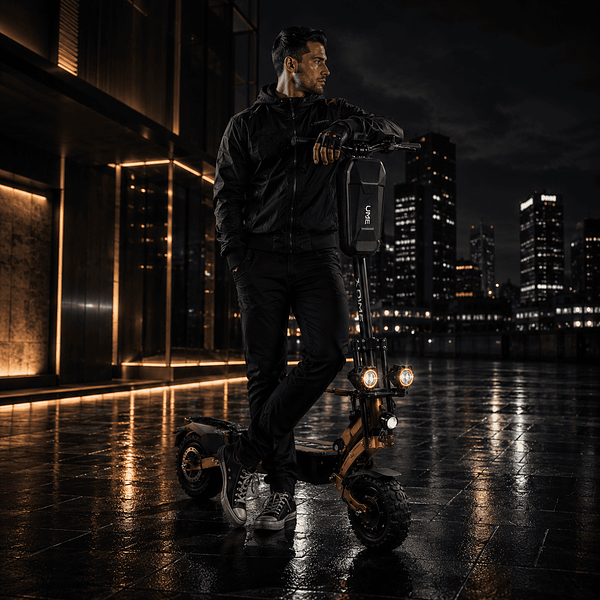
| High-performance use | Is public-road use actually intended and permitted? | Prominent private-land/off-road disclosure where the low-speed category is not met | Performance claim presented as legal approval |

Save the evidence
Keep the product page, invoice, serial number, certification record, charger specification and the official rules used to plan the purchase. Web pages change.
Segment the catalogue
Separate low-speed commuter products from performance/private-use machines. Filter by maximum capability—not the rider’s intended setting alone.
Design for access
Permits should address parking clear zones, disability access, first-ride speed, incident reporting, data minimisation, battery certification and rapid removal.
Explore INTHEZONE’s U.S. electric mobility collection, helmets, locks and safety gear, and our electric scooter legal and buying hub. Product availability does not itself grant public-road permission.
What changed—and what to watch after July 2026
The fastest-moving issues are battery standards, state classification gaps and local technology controls.
Delaware creates a private low-speed category
House Bill 114 legalised qualifying scooters incapable of more than 15 mph, set age and helmet rules, prohibited rental service and scheduled the permanent product label for 1 January 2026.
Connecticut’s updated scooter terminology and youth protections take effect
The 2026 supplement reflects 2025 amendments, including “electric scooter” terminology and protective-headgear coverage for riders 17 and under in listed areas.
New York City’s 15 mph e-mobility limit takes effect
The citywide rule confirms a 15 mph ceiling for e-scooters and other listed e-mobility devices, reinforcing that state device capability and city operating speed are not the same.
Seattle requires smarter shared-fleet enforcement
The 2026 permit adds sidewalk/reckless-riding detection deployment, improved GPS, geofenced slow zones and higher potential rider-account penalties.
PennDOT publishes a current micromobility classification sheet
PUB 944 states that ordinary electric scooters are not specifically defined and that undefined devices may not be legally operated on highways, including roads, bike lanes and sidewalks.
CPSC advances a mandatory battery-safety proposal
The Commission approved publication for comment of a proposed standard addressing lithium-ion thermal runaway, fires and explosions. Monitor the final rule, scope, effective date and compliance period.
Illinois SB3336 returns to Assignments
The bill would overhaul electric micromobility and repeal the current low-speed scooter provision with an intended 1 July 2027 effective date. It is not current law as of this review.
Hawaii signs Act 259
The new statewide framework updates definitions, registration, product labelling and age/safety controls for electric bicycles and micromobility devices. Buyers and fleets should verify agency implementation guidance before relying on older summaries.
How to read the next headline: identify whether it is a bill, committee amendment, passed chamber text, signed act, proposed rule, final rule, local permit or enforcement announcement. Only an enacted and effective provision changes the legal baseline; proposals still matter for inventory and compliance planning.
USA electric scooter law FAQ
Concise answers for riders, buyers, retailers, governments, campuses and AI search systems.
Are electric scooters legal in every U.S. state?
No. Many states expressly recognise low-speed scooters, but the definitions and operating rules differ. Some states use older or adjacent categories; Pennsylvania’s June 2026 guidance says ordinary electric scooters are not specifically defined and may not be legally operated on roads, bike lanes or sidewalks. Local law can narrow access even where the state recognises the device.
What is the legal speed limit for an electric scooter in the USA?
There is no national speed limit. Fifteen or 20 mph is common, but it may be a maximum design speed, an operating speed or both. California and New York cap operation at 15 mph; New York’s qualifying device can be capable of 20 mph. Illinois’s current category is limited to 10 mph, while Oklahoma has a higher state ceiling. Local slow zones can be lower.
Do I need registration or insurance?
Many modern low-speed categories exempt qualifying scooters from ordinary registration and motor-vehicle insurance. Hawaii requires permanent registration, while a faster or moped-like device may enter a category requiring title, plate, licence and insurance. Never transfer the exemption from a qualifying stand-up scooter to a high-performance machine.
Can a teenager ride an electric scooter?
It depends on the jurisdiction. Minimum ages range widely, and youth helmet rules are common. California, New York, Oregon, Delaware, Hawaii, Connecticut and other states have specific age or youth-safety requirements. Shared operators can set a higher contractual age than the traffic law.
Can I use a scooter in a bike lane?
Often, but only if the device qualifies and the state/city permits it. NYC allows qualifying scooters in bike lanes; Los Angeles encourages bike-lane use; Texas permits bicycle-only paths subject to local restriction. Parks, natural-surface trails and federally funded paths may apply separate rules.
Can I take an electric scooter across state lines?
You can transport the product, subject to carrier and battery rules, but operating permission does not travel with it. Re-run the classification, rider and route checks for every state, city, campus and land manager. Rental scooters usually cannot leave their geofence.
Is a seated electric scooter treated the same as a stand-up scooter?
Not automatically. Some statutes permit a seat within the scooter definition; others use a stand-on floorboard, wheel size or moped/motorcycle characteristics. Seated high-speed products need a separate classification review.
What should I verify before buying?
Record the maximum capable speed, weight, motor rating, wheel/floorboard/seat design, exact battery and charger, accredited test evidence, manufacturer/importer, serial number and recall status. Then check the intended rider and route in the current state and local rules.
Official references and editorial method
Reviewed 24 July 2026. Primary law and government guidance are prioritised; older national scans are labelled and later changes are not backdated.
- National Conference of State Legislatures — States Roll Out Electric Scooter Laws (updated 6 September 2024)
- CPSC — Micromobility Products-Related Deaths, Injuries and Hazard Patterns, 2017–2024 (April 2026)
- CPSC — proposed lithium-ion battery safety standard statement (22 June 2026)
- CPSC — call to comply with micromobility battery standards
- CPSC — universal charger fire warning
- CPSC — Transpro US recall and unauthorised certification labels
- CPSC — Toos Elite electric scooter warning
- NHTSA — 1998 stand-up scooter interpretation
- NHTSA — 2003 mini-bike / scooter interpretation
- U.S. DOT — Electric Micromobility Basics
- Congress.gov — H.R. 973, Setting Consumer Standards for Lithium-Ion Batteries Act
- Congress.gov — S. 389
- California Vehicle Code §21235
- New York VAT §114-e — electric scooter definition
- New York VAT §1282 — operation of electric scooters
- Florida Statutes §316.2128
- Texas Transportation Code Chapter 551
- Illinois Public Act 103-899
- Illinois SB3336 status (proposal)
- Oregon Revised Statutes Chapter 814
- Washington RCW 46.04.336 — definition
- Washington RCW 46.61.710 — operation
- Massachusetts General Laws c.90 §1E
- Delaware Laws, Volume 85, Chapter 161
- PennDOT — PA Micromobility Information Sheet, PUB 944 (6-26)
- Hawaii DOT — Act 259 micromobility notice
- Hawaii HRS §249-35 — electric foot scooter registration
- Connecticut 2026 Supplement, Chapter 248
- D.C. Code §50-2201.02 — definitions
- D.C. Law 23-203 — Shared Fleet Devices Amendment Act
- NYC DOT — Electric Bicycles & More / e-scooter rules
- LADOT — Micromobility rules
- SFMTA — Scooter safety rules
- City of Austin — Shared Mobility
- Seattle DOT — 2026 scooter-share safety permit update
Editorial method: claims are separated into federal product law, state vehicle law, local operating control and future proposals. Device capability is not confused with operating speed. Private and shared-fleet rules are not merged. Where a current primary source was not verified, the state index says “verify category” rather than guessing. This is a research reference, not legal advice.
Choose the scooter only after the rider, route and jurisdiction are clear.
INTHEZONE brings products, protective equipment and source-led compliance guidance into one buying journey. A product listing is never a substitute for current state and local permission.
Also read the UK private-vs-rental rulebook, the Ireland 2026 study, or contact INTHEZONE support.